Embedded Files

IQ1 How do the properties of substances help us to classify and separate them?
IQ1 How do the properties of substances help us to classify and separate them?
1.1a explore homogeneous mixtures and heterogeneous mixtures through practical investigations:
using separation techniques based on physical properties
1.1a-1 View PPTs: https://drive.google.com/drive/u/1/folders/1wh9NrjWiICM38b7Qeulq0A5TDODRiHUx
States of Matter
Mixtures
 11C PSM 1a States of Matter PPT.pptx11C PSM 1a Mixtures PPT2.ppt
1.1a-3. Homework videos:
1.1b explore homogeneous mixtures and heterogeneous mixtures through practical investigations:
calculating percentage composition by weight of component elements and/or compounds
1.1b-1 Worksheet: Percentage composition worksheet
Chemistry-Percent-Composition-Worksheet.pdf1.1b-2 Practicals:
Gravimetric analysis of choc-chip cookies https://drive.google.com/drive/u/1/folders/1wh9NrjWiICM38b7Qeulq0A5TDODRiHUx
Gravimetric analysis of sand / salt mixture
1.1b-3 Homework Video:
11C PSM 1b Gravimetric Analysis Fruit WS.docxIQ2 Why are the atoms of elements different from one another?
IQ2 Why are the atoms of elements different from one another?
2.1 classify the elements based on their properties and position in the periodic table through their:
- physical properties
- chemical properties
Homework videos:
Classifying elements physically: https://www.youtube.com/watch?v=PrUH2XGyafI&list=PLeFSFSJ9WqSARl70FH6vBJCVfhtu4JjKP&index=4
Classifying elements chemically: https://www.youtube.com/watch?v=CIzt0pUDq7A&list=PLeFSFSJ9WqSARl70FH6vBJCVfhtu4JjKP&index=7
2.2 Model the atom’s discrete energy levels, including electronic configuration and spdf notation
2.2-1 Read the following (only read the text showing, continue further if you want to extend, but we will cover that in class.)
2.2-2 View PPTs:
Atomic Structure and Atomic Mass PPT
Quantum Physics PPT
11C PSM 2d Atomic structure and mass.pptx11C PSM 2c Quantum Physics PPT.pptx2.2-3 View videos:
Atomic History: https://www.youtube.com/watch?v=rwn427EPBR0&list=PLeFSFSJ9WqSARl70FH6vBJCVfhtu4JjKP&index=13
Electron configuration: https://www.youtube.com/watch?v=VWyTey2x2s8&index=10&list=PLeFSFSJ9WqSARl70FH6vBJCVfhtu4JjKP
Quantum numbers Prof Dave: https://www.youtube.com/watch?v=Aoi4j8es4gQ
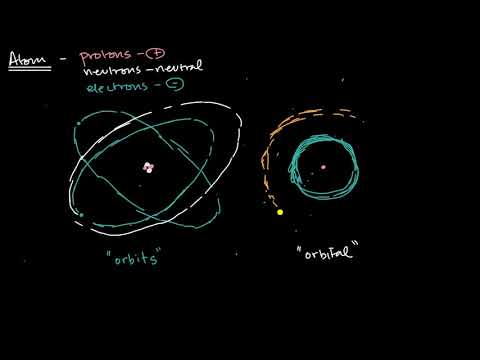
Orbitals explained: https://www.youtube.com/watch?v=CP35NuspGlk
spdf orbitals explained: https://www.youtube.com/watch?v=sE1IvKAijmo
Orbitals crash course: https://www.youtube.com/watch?v=cPDptc0wUYI
2.2-4 Complete activities:
2.2-5 Homework videos:
2.3 investigate energy levels in atoms and ions through:
- collecting primary data from a flame test using different ionic solutions of metal salts
- examining spectral evidence for the Bohr model and introducing the Schrödinger model
View PPT:
Electron Config PPT https://drive.google.com/drive/u/1/folders/1wh9NrjWiICM38b7Qeulq0A5TDODRiHUx
View videos:
Flame tests: https://www.youtube.com/watch?v=lKruq_80LKc&index=8&list=PLeFSFSJ9WqSARl70FH6vBJCVfhtu4JjKP
Schrodinger model: https://www.youtube.com/watch?v=y9eb1yQ_Yw0&index=14&list=PLeFSFSJ9WqSARl70FH6vBJCVfhtu4JjKP
Bohr model flame test explanation: https://www.youtube.com/watch?v=tuRnBEiQ4yA
Bohr and Schrodinger models: https://www.youtube.com/watch?v=ijFYl4zHscY
Read:
Complete activities:
Copy of 11PALS Chem Bohr Model - Evaluate.docx

2.4 calculate the relative atomic mass from isotopic composition
View PPTs: https://drive.google.com/drive/u/1/folders/1wh9NrjWiICM38b7Qeulq0A5TDODRiHUx
Atomic Structure and Mass PPT
Atomic Mass PPT
Isotopes Spectra PPT
View videos:
Isotopes: https://www.youtube.com/watch?v=kTcGkLR9dQ0&list=PLeFSFSJ9WqSARl70FH6vBJCVfhtu4JjKP&index=12
Symbol notation for isotopes: https://www.youtube.com/watch?v=Gso_eNAIJdc&index=11&list=PLeFSFSJ9WqSARl70FH6vBJCVfhtu4JjKP
Relative atomic mass: https://www.youtube.com/watch?v=KymWeZ6mNd8&list=PLeFSFSJ9WqSARl70FH6vBJCVfhtu4JjKP&index=9
Relative atomic mass: https://www.youtube.com/watch?annotation_id=annotation_1815037825&feature=iv&src_vid=aqfQKzbTCVo&v=PrNVj8i_oDA
Complete online activities:
Average Atomic Mass Practice Problems https://www.youtube.com/watch?v=rgixSP7PxS0&index=17&list=PL0o_zxa4K1BWziAvOKdqsMFSB_MyyLAqS [10.19 mins]
2.5 investigate the basic structure of stable and unstable isotopes by examining:
- their position in the periodic table
- the distribution of electrons, protons and neutrons in the atom
- representation of the symbol, atomic number and mass number (nucleon number)
View PPTs: https://drive.google.com/drive/u/1/folders/1wh9NrjWiICM38b7Qeulq0A5TDODRiHUx
Radiation PPT
View simulations:
View videos:
Radiation and radioisotopes: https://www.youtube.com/watch?v=ok63ZzUQbx4&index=20&list=PLeFSFSJ9WqSARl70FH6vBJCVfhtu4JjKP
2.6 investigate the properties of unstable isotopes using natural and human-made radioisotopes as examples, including but not limited to:
- types of radiation
- types of balanced nuclear reactions
View videos:
Applications of radioisotopes: hhttps://www.youtube.com/watch?v=HhsgpMDEKs8&index=18&list=PLeFSFSJ9WqSARl70FH6vBJCVfhtu4JjKP
Nuclear reactions: https://www.youtube.com/watch?v=0FSG4-wCQYs&index=19&list=PLeFSFSJ9WqSARl70FH6vBJCVfhtu4JjKP
Review:
View PPTs: https://drive.google.com/drive/u/1/folders/1wh9NrjWiICM38b7Qeulq0A5TDODRiHUx
IQ2 Wrap up PPT
Google Sites
Report abuse